
GNSS Receiver GP-3
GP-3 – Mobile GNSS Multisystem (GPS/Glonass/Galileo/Beidou) Receiver for LunaBat DFR-1/DFR-1 PRO detectors (SKU#192)
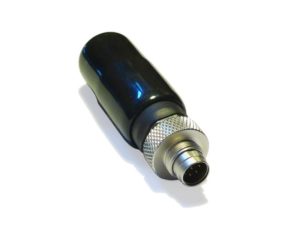
GP-3 – Mobile GNSS Receiver (GPS/Glonass/Galileo/Beidou)
Mobile GNSS receiver GP-3 is an upgraded version of our previous GP-1 receiver. It is also fully compatible with older LunaBat DFR-1 (non-PRO) detectors and it’s a drop-in replacement with better sensitivity and better satellite signal selectivity, thanks to newer antenna. It also has better signal to noise ratio and can now receive signals from GPS, Glonass, Galileo and Beidou systems (not all systems simultanously) and from local / support systems such as SBAS / WAAS / GAGAN.
Default configuration receives GPS+Glonass+Galileo, but it can be configured to receive:
– only GPS
– only Glonass
– only Beidou
– GPS + Glonass
– GPS + Galileo
– GPS + Beidou
Receiving mode can be changed in the detector’s menu, but default configuration can be also changed on demand (contact with Manufacturer).
The GP-3 receiver is designed mainly to be mounted directly in the expansion slot in the LunaBat DFR-1 or LunaBat DFR-1 PRO detector, or it can be connected to detector (or other device) via optional extender cable. It works with one, two or three geolocation systems simultaneously to keep your location in more severe conditions than if you were using only one system.
When 2D or 3D fix is achieved, it is indicated by a blue blinkin’ LED located above the LCD screen on the detector. In addition, the way of displaying the status has also been changed in the GP-3 receiver: the activation of the blue LED in the detector is directly related to the moment of obtaining a 2D or 3D fix, the flashes of the diode have been replaced with continuous illumination with short dimming (~40ms with each frame of dataset = 1Hz) – thus, there are no sudden changes in intensity in the darkness, which could be tiring on the eyes. The receiver (when connected to detector) can store ephemeris and almanac even after the detector is turned off, and when detector is re-enabled – achieving fix is much faster than at first fix (this is called: Hot Start mode, when under 2 hours, and Warm Start mode for more than 2 hours after turning off the detector).
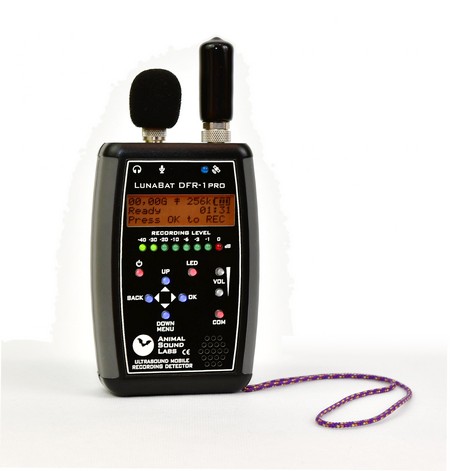
Detector LunaBat DFR-1 PRO with GP-3 receiver
The GP-3 receiver is designed primarily to extend the capabilities of the LunaBat DFR-1 and LunaBat DFR-1 PRO detectors. It can be mounted directly in the detector’s expansion slot on the socket panel, or via optional extension cable (available for individual order). Its sealed housing and connector (IP-65 when connected to a dedicated waterproof connector) and small external dimensions, combined with multi-system operation, ensure trouble-free, fast, and reliable pinpointing of the recordings, even in more challenging conditions than most devices on the market.
Compared to its predecessor (GP-1 receiver), the GP-3 receiver, thanks to the use of a different type of antenna, a different version of the receiving module and internal LNA, as well as a newer firmware version, is characterized by:
- Faster and more reliable FIX acquisition, even in relatively low sky visibility or under heavy cloud cover.,
- Greater resistance to external interference, such as from cellular networks, WiFi, LTE, and other electromagnetic interference.,
- The illumination of the blue indicator light on the detector is strictly dependent on obtaining a 2D or 3D FIX,
- The indicator light pattern has also been changed from short pulses every second (which could be annoying at night when there is no other lighting and the detector’s backlight is turned off) to continuous illumination with a short dimming of the indicator light every second.
- It is also possible to adapt the receiver to work with products from other manufacturers (by modifying the receiver’s internal firmware before shipping to the customer), for example, by changing the default data transfer rate to a range of 4.8kbps-115kbps and/or the bearing refresh rate to a range of 1-10 Hz, or by modifying the signal content in the stream of generated NMEA sentences. You can also change the operating parameters of the Locus logger built into the receiver, e.g., change the route logging frequency from 15 seconds to 2 seconds (similar to the Anabat SD1/SD2 detectors). For more information, contact us.
(Translating…)
Dlaczego odbiornik GNSS zamiast samego GPS ? (opis i zdjęcia tymczasowo skopiowane ze strony o GP-1)
Gdy warunki są dobre, można uzyskać odbiór z wielu satelit i uzyskanie współrzędnych jest łatwe w większości spotykanych na rynku urządzeń. Na zdjęciu po prawej stronie widać odbiornik GP-1 (po lewej stronie, tuż przed osadzeniem go w ekranującej obudowie) wraz ze smartfonem jako urządzenie monitorujące (GP-1 jest podłączony do komputera PC, zaś telefon komórkowy pokazuje obraz z monitora komputera za pomocą aplikacji do zdalnego dostępu). Po prawej stronie zdjęcia jest odbiornik GPSmap 78 firmy Garmin. Jak widać – oba urządzenia otrzymują silne sygnały z wielu satelit. Na Garminie mamy do dyspozycji 9 z 10 sygnałów z satelit GPS, a odbiornik GP-1 odbiera 9 z 10 sygnałów GPS (niebieskie słupki) oraz 6 z 8 sygnałów Glonass (czerwone słupki). Łącznie mamy więc odbieranych 15 z 18 sygnałów o silnym, użytecznym poziomie. Aby uzyskać namiar dwuwymiarowy (bez wysokości – 2D FIX) potrzebne są silne sygnały z co najmniej trzech satelit. Aby uzyskać namiar trójwymiarowy (3D FIX), potrzebne są silne sygnały z co najmniej czterech satelit, więc oba urządzenia mają wystarczająco dużo silnych sygnałów aby uzyskać poprawny namiar 3D.
Jednak sytuacja zmienia się, gdy warunki odbioru są gorsze. Poniższe zdjęcia pokazują te same odbiorniki wewnątrz mieszkania w budynku (co odpowiada gorszym warunkom odbioru i mniejszej widoczności nieba, co jest często spotykane podczas pracy w terenie). Można zauważyć mniejszą liczbę odbieranych satelit, z których można uzyskać użyteczny poziom sygnału, jak również niższy odstęp od szumów (krótsze słupki). Na zdjęciu po lewej stronie widać, że urządzenie Garmin korzysta tylko z jednego systemu geolokalizacji (american GPS) i znajduje się na krawędzi utrzymywania współrzędnych, na ekranie pojawił się komunikat “Słaby sygnał GPS” z powodu odbioru tylko 3-4 sygnałów z satelit, lecz nasz odbiornik GP-1 nadal odbiera sygnał z satelit GPS i Glonass i odbiera w sumie 11 użytecznych sygnałów.


W przypadku odbiornika GP-3 mamy do dyspozycji dodatkowo satelity z jeszcze jednego globalnego systemu – europejskiego Galileo, a także satelity systemów lokalnych i wspomagających (SBAS, Gagan, QZSS). W aktualnej wersji firmware odbiornik GP-3 może używać kombinacji sygnałów z ww. systemów, dzięki czemu uzyskanie namiaru jest możliwe, gdy co najmniej 3 lub 4 satelity są dostępne spośród dowolnego z systemów łącznie (np. 1 widoczny satelita GPS, 1 satelita Glonass i 1 satelita Galileo = namiar 2D).

Odbiór sygnałów z 4 systemów w odbiorniku GP-3 przy średnim zachmurzeniu z balkonu 1p. na osiedlu, tylko satelity widziane bezpośrednio mają silny sygnał

Odbiór satelit z systemów GPS, Glonass, Galileo i SBAS w odbiorniku GP-3 przy średnim zachmurzeniu i dobrej widoczności nieba

Nowość: w najnowszych wersjach firmware (od wersji 7.29 wzwyż) w menu detektorów LunaBat DFR-1 i DFR-1 PRO zostały dodane dwie nowe opcje wyboru systemu: GPS+Beidou lub Beidou only . System Beidou osiągnie pełną funkcjonalność przed końcem 2020r, jednak na chwilę obecną (listopad 2018r) aktywnych jest już 17 z 38 wystrzelonych satelit. Posiadają one moc nadawczą znacznie większą niż satelity systemu GPS, dzięki temu wkrótce powinny stanowić ważny i cenny dodatek do ogólnej puli dostępnych do nawigacji satelit.
Po co w ogóle jakieś dodatkowe systemy geolokacji – czy nie wystarczy GPS plus ewentualnie Glonass? – odpowiedź znajduje się np. tutaj: https://geotronics.com.pl/blog/po-co-galileo-i-beidou-gps-i-glonass-nie-wystarcza/
Odbiornik GP-3 posiada również wbudowany niezależny loger MTK Locus (który wykorzystywany był w detektorach LunaBat DFR-1 z firmware w wersjach starszych niż v.7.0). Loger ten przy domyślnych ustawieniach zapisuje koordynaty transektu co 15 sekund** w wewnętrznej pamięci flash. Po skopiowaniu zawartości tej pamięci do pliku tekstowego można ten plik skonwertować np. do popularnego formatu Google KML lub do innego formatu np. za pomocą darmowej aplikacji GPS Babel.
W detektorach LunaBat DFR-1 od wersji firmware v.7.00 pliki Google KML mogą być bezpośrednio na karcie pamięci wygenerowane z logów tekstowych zapisywanych razem z nagraniami, więc wbudowany loger Locus (choć nadal w pełni funkcjonalny) nie jest już potrzebny i jego obsługa została tymczasowo usunięta z menu aktualnie produkowanych detektorów – więcej informacji w zakładce Logowanie GPS na stronie opisowej detektora LunaBat DFR-1.
Istnieje także odbiornik GP-2 – samochodowa wersja odbiornika GP-3. Więcej informacji TUTAJ.
_____________________________________________
* – kompatybilny sprzęt musi odbierać tzw. sentencje NMEA i nadawać komendy wg protokołu PMTK z prędkością 4800bps-115kbps (prędkość domyślna podczas inicjalizacji odbiornika wynosi 9600bps, można ją zmienić za pomocą protokołu PMTK lub poprzez modyfikację firmware odbiornika u Producenta). Napięcie zasilania odbiornika musi zawierać się w przedziale 3.0-3.6V.
** – częstotliwość domyślna odbiornika, można ją zmienić za pomocą protokołu PMTK lub poprzez modyfikację firmware u Producenta